Powder Coating
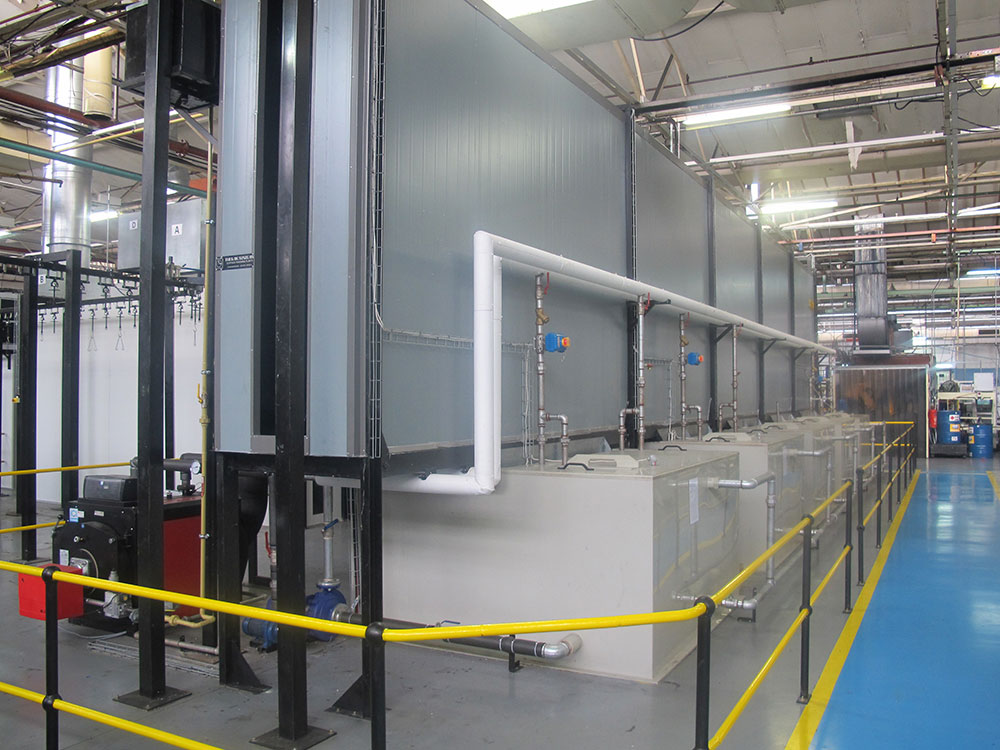
Electrostatic powder coating plants are available in manual batch coating to fully automatic powder application which includes metal pre-treatment, surface drying, coating and final powder curing.
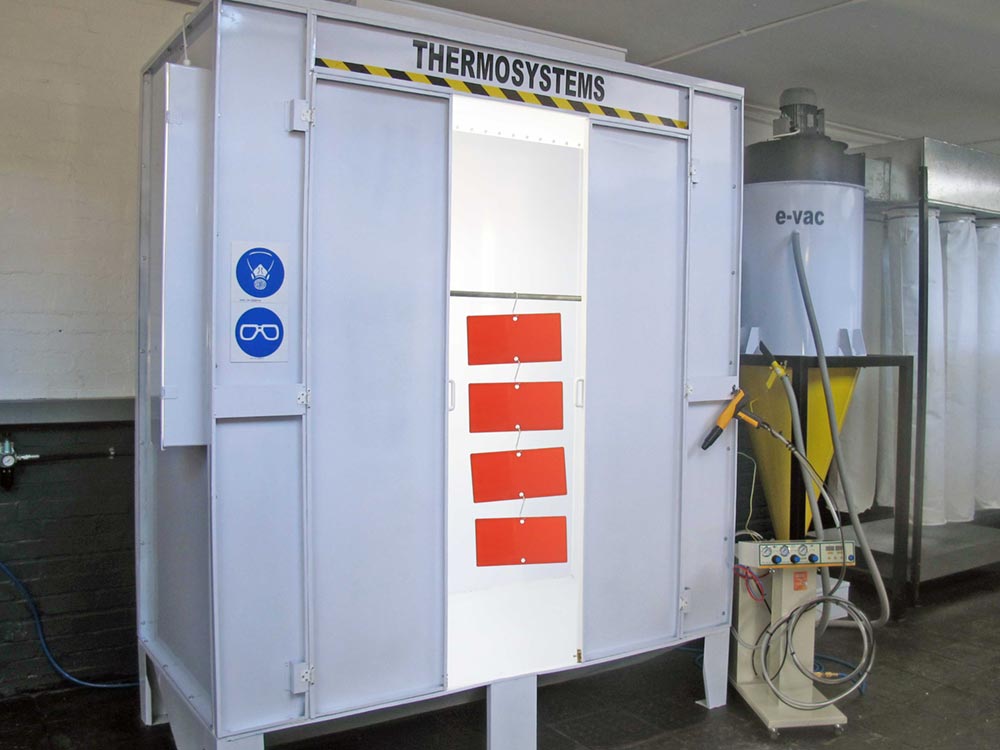
The complete plant is system managed and for fully automatic application twin reciprocators are positioned both sides of the spray booth and can be equipped with multiple guns depending on the product configuration and conveyor line speed. Additional manual touch-up stations can be provided to ensure powder coverage.
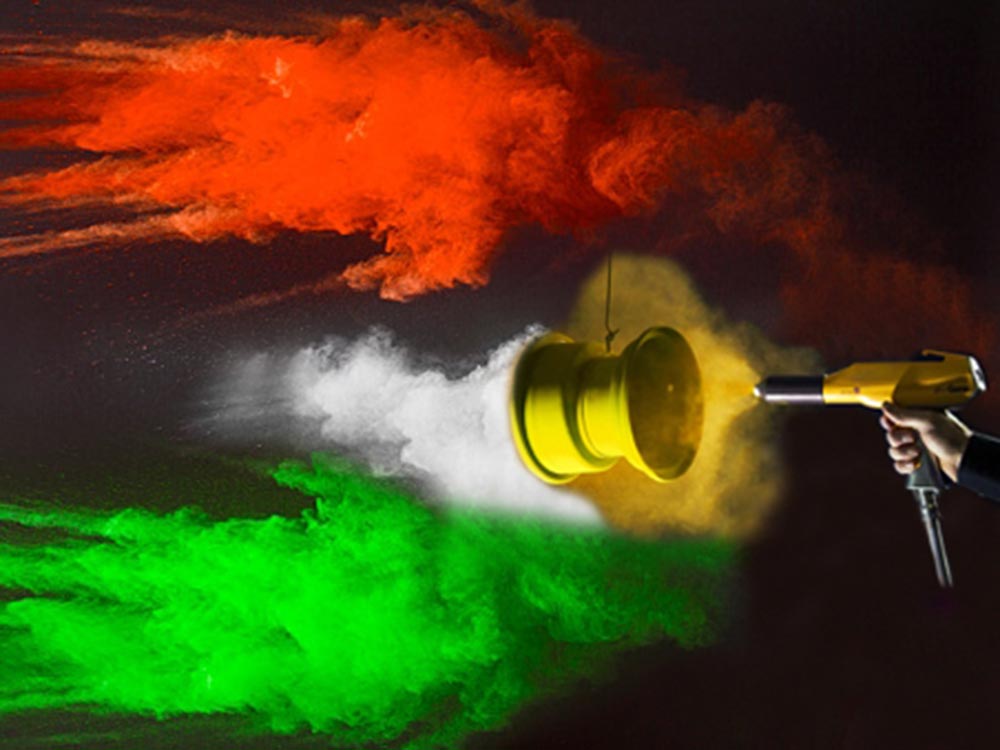
Powder coating holds a major advantage over liquid coatings in that the overspray can be recycled and introduced back into the coating system minimizing material waste.
Surface powder application produce a thicker coating than liquid paints and are applied in one coating sequence, eliminating the need for multiple over-coating as is required with liquid paints.
Ideal for all metal parts that require a heavy duty industrial coating and ensuring greater resistance to UV and surface wear and tear for the parts to be coated, a range of powders are available in Epoxy, Polyester and Polyurethane all fusion bonded at elevated temperatures.
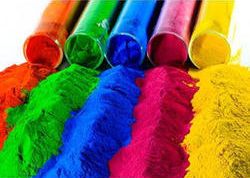
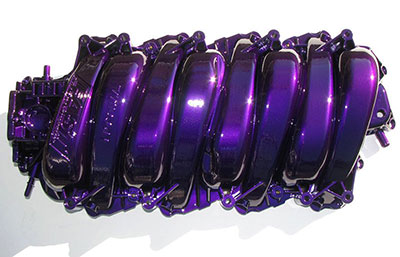
Multi colour powders are available including metallic and texture coatings all processed through the same powder plant equipment giving a vast range of finishes and surface hardness.
Powder Coating Process
- Product Preparation / Pre-Treatment
- Powder Application
- Powder Curing
Complete powder coating plants, designed and built in South Africa
Thermosystems has designed and manufactured paint finishing plants since 1987. A powder coating plant from us is engineered as one system, from the first pre-treatment stage to the curing oven, so that every stage runs at the same line speed and suits the same product size. Plants are manufactured in our own workshop in Benoni and installed and commissioned by our team.
The stages of a powder coating plant
- Pre-treatment. The metal is cleaned and prepared so the powder bonds to the surface.
- Surface drying. A drying oven removes moisture left by pre-treatment before any powder is applied.
- Powder application. Electrostatic guns apply the powder inside a powder spraybooth. Overspray is recovered and fed back into the coating system.
- Curing. A curing oven melts the powder and bonds it into a hard, continuous film. Typical powder cure schedules run at around 180 to 200 °C metal temperature for 10 to 20 minutes, always to the powder manufacturer's datasheet.
Manual batch plant or automatic line?
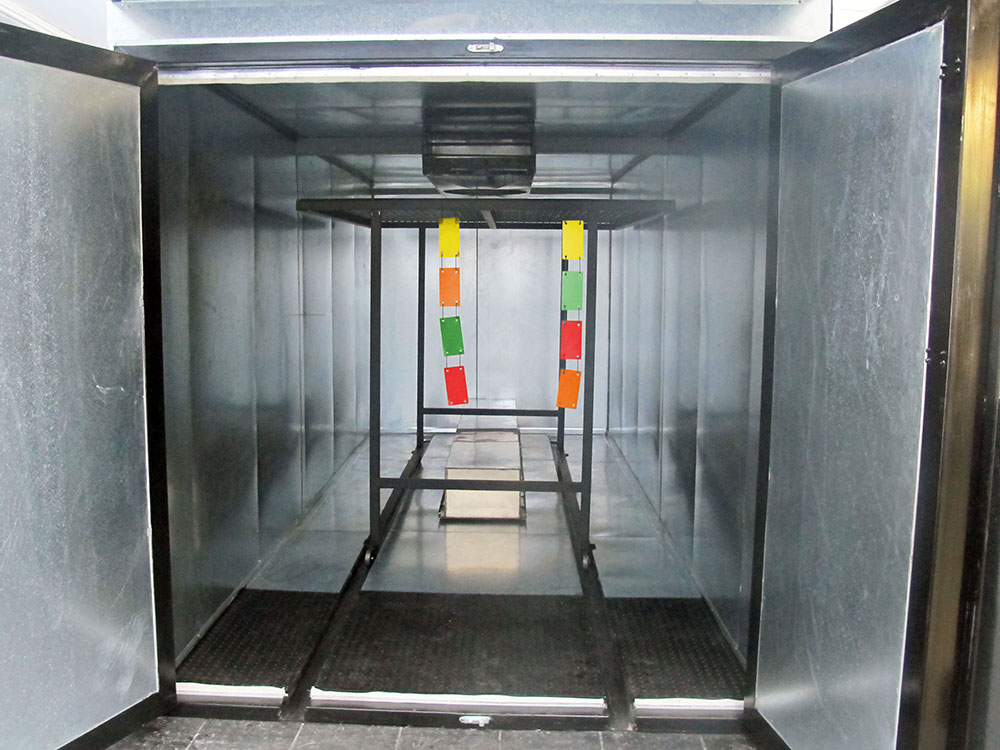
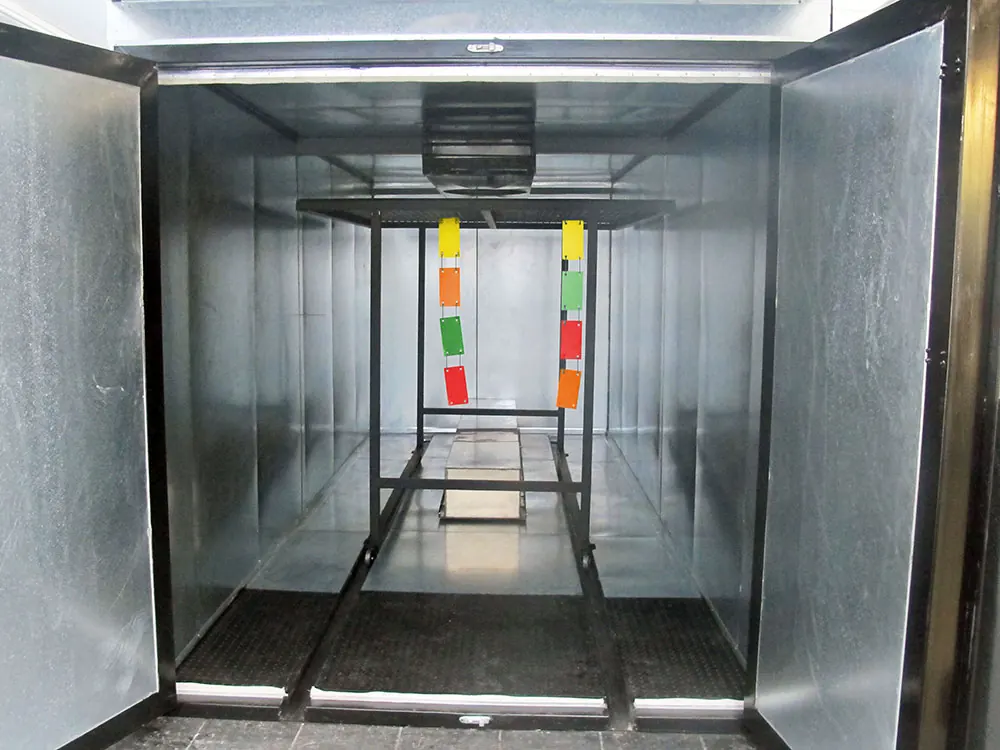
Manual batch plants suit jobbing work, mixed products and lower volumes. Parts are coated by hand in a powder booth, then loaded on trolleys or racks into a batch curing oven. Our batch ovens are of modular panel construction, so the oven is built to your components and floor space and can be extended or moved later.
Fully automatic lines suit continuous production. A conveyor carries the parts through pre-treatment, drying, coating and curing. Twin reciprocators on both sides of the booth carry the automatic guns, with the number of guns set by the product shape and the conveyor speed, and manual touch-up stations cover difficult shapes. A tunnel oven, sized from the line speed, the product mass and the cure schedule, cures the parts as they pass through.
Curing ovens for powder coating
The oven decides the final quality of the coating. Under-cured powder stays soft and chips, and over-cured powder discolours and turns brittle. Our batch and tunnel curing ovens are available with gas, diesel, electric or hot-water heating, and standard builds cover process temperatures up to 220 °C.
Upgrading an existing powder coating plant
A plant that is short of capacity does not always need replacing. We supply curing ovens as standalone replacements into existing lines, and our consulting service assesses existing plants and recommends upgrades. In some cases existing equipment can be salvaged and put back into service.
What we need to quote a powder coating plant
- Your largest part: length, width, height and weight.
- Your output: parts per shift, now and in the next few years.
- What the parts are made of, and the condition they arrive in.
- The powders and colours you run, and how often you change colour.
- The floor space and roof height available, and the energy on site (gas, diesel or electric).
Send these with the form on this page or email sales@thermosystems.co.za, and one of our engineers will come back to you.
Powder Coating Plant FAQ
What is a powder coating plant?
The complete line that takes a metal part to a cured powder finish: pre-treatment, surface drying, electrostatic powder application in a powder spraybooth, and a curing oven, all sized to the same throughput.
Should I choose a manual or an automatic powder coating plant?
Volume decides. Jobbing and mixed work suit a manual batch plant with a powder booth and a batch curing oven. Steady production volumes justify a conveyor line with reciprocating automatic guns, manual touch-up stations and a tunnel oven.
Can powder overspray be reused?
Yes. Overspray is recovered and introduced back into the coating system, which keeps material waste low. This is one of powder coating's main advantages over liquid paint.
Which powders can a Thermosystems plant run?
Epoxy, polyester and polyurethane powders, including metallic and texture finishes, are all processed through the same plant equipment.
What temperature does powder coating cure at?
Typical powder cure schedules run at around 180 to 200 degrees C metal temperature for 10 to 20 minutes. Always follow the powder manufacturer's datasheet. Our standard curing ovens cover process temperatures up to 220 degrees C.
Can you upgrade an existing powder coating line?
Yes. We supply curing ovens as standalone replacements into existing lines, and our consulting service assesses existing plants and recommends upgrades.